
Ribeye vs Striploin vs Tenderloin: How to Choose the Right Steak
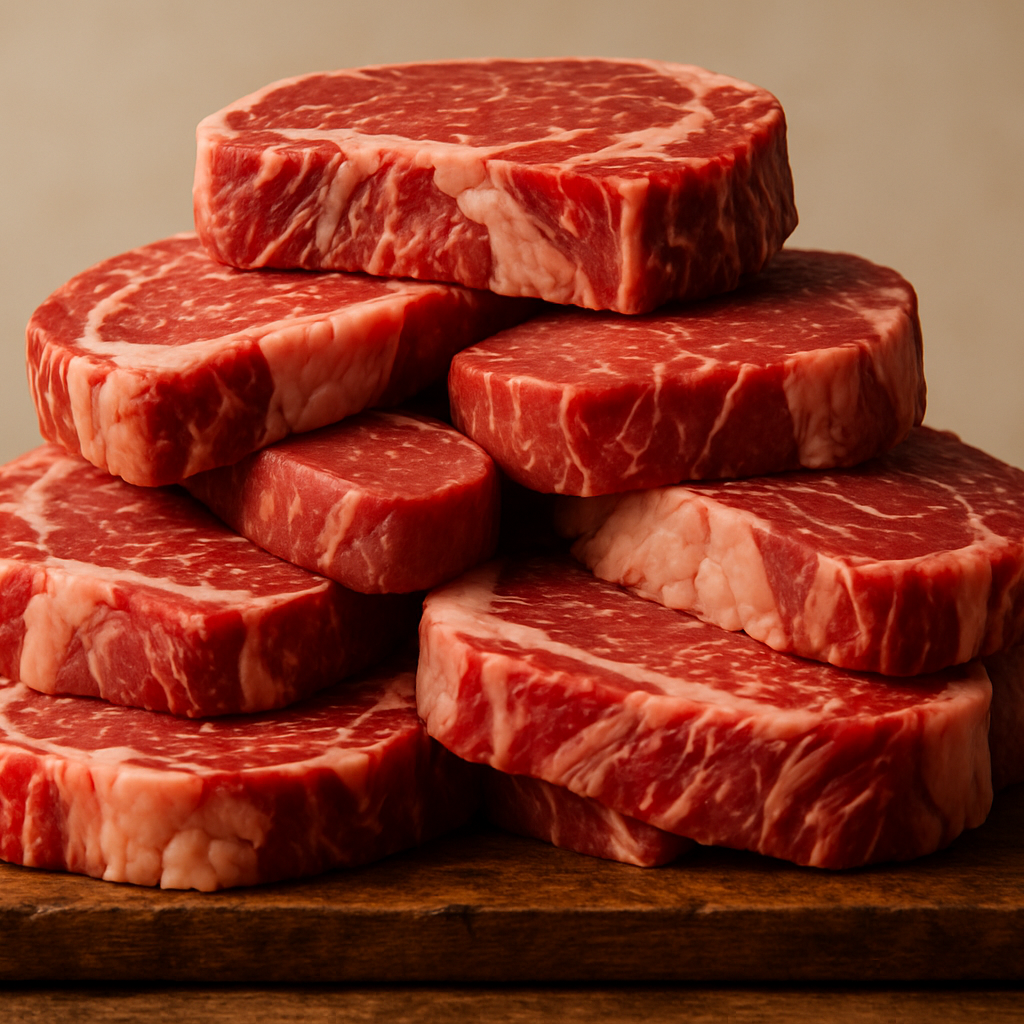
Ribeye vs striploin comes down to fat and flavour: ribeye is richer and more heavily marbled, while striploin is leaner, firmer and still full of beefy flavour. Tenderloin, sold as filet mignon when cut into steaks, belongs in the same choice. It is the most tender and the leanest of the three.
This guide from your Calgary butcher shows you how to choose among the best steak cuts for your budget and the meal you are planning, how striploin differs from sirloin, and what to ask at the counter when you want a custom cut of Alberta Angus.
Quick answer
Buy ribeye if flavour and juiciness matter most. Buy striploin (New York strip) for a balance of beefy flavour, tenderness and a cleaner bite with less fat. Buy tenderloin (filet mignon) for the most tender steak or a special occasion, knowing it is milder and usually costs the most. If budget leads, top sirloin is the value pick. The comparison table below lines up all four.
In this guide
Quick comparison: ribeye, striploin and tenderloin
| Ribeye | Striploin | Tenderloin | Top sirloin | |
|---|---|---|---|---|
| Also called | Rib eye, rib steak (bone-in) | New York strip, strip loin | Filet mignon, filet | Sirloin steak |
| Where it comes from | Rib section | Short loin, behind the rib | Under the loin, along the spine | Sirloin, behind the short loin |
| Marbling | High | Moderate | Low | Low to moderate |
| Tenderness | Very tender | Tender with a slight chew | Most tender | Moderately tender |
| Flavour | Rich and buttery | Bold and beefy | Mild and delicate | Beefy and lean |
| Typical price position | High | Mid to high | Highest | Lowest of the four |
| Best cooking method | Hot grill or cast iron | Pan-sear or grill | Sear, then gentle heat | Grill or pan-sear; do not overcook |
| Best for | Steak lovers who want flavour | Everyday steak night and crowds | Special occasions and lean eaters | Budget meals, salads, stir-fries |
Ribeye: rich and well-marbled
Ribeye comes from the rib section, the same muscle used for a prime rib roast. It carries the most intramuscular fat of the three cuts, and that marbling melts as it cooks, which is why ribeye tastes rich and stays juicy even if it goes a little past medium-rare. Many ribeyes also include the spinalis, or ribeye cap, a curved strip along the top that is the most tender and flavourful bite on the steak.
Buy ribeye if flavour is your priority and you do not mind some fat on the plate. Ribeye is also sold as a rib eye or, with the bone attached, a rib steak, and you can order ribeye steaks online through Backyard Meats. Leave the rib uncut and roast it whole and you have prime rib.
Striploin (New York strip): the balanced choice
Striploin is a steak cut from the short loin, the section just behind the rib. In the United States and on many restaurant menus it is called a New York strip, and you will also see strip loin or strip steak. They are the same cut. A striploin steak has a band of fat along one edge, moderate marbling through the meat, and a tighter grain than ribeye.
Is striploin a good steak? Yes. It sits in the middle of the three: beefier and leaner than ribeye, with more chew and more flavour than tenderloin. Striploin is tender enough for a hot sear, easy to portion, and a reliable choice when you are cooking for a group with mixed tastes. You can order striploin steaks online through Backyard Meats, or buy a whole striploin and cut your own.
Tenderloin (filet mignon): tender and lean
Tenderloin is a long, narrow muscle that runs along the inside of the spine beneath the loin. Filet mignon is the name for steaks cut from it. Because the muscle does very little work, it has almost no connective tissue, which makes it the most tender steak on the animal.
Tenderloin costs more for two reasons. Each animal has only a small amount, and trimming it for steaks removes a fair amount of weight. The trade-off for that tenderness is a milder flavour and very little marbling, so filet mignon is often served with a sauce or wrapped in bacon. Choose it over ribeye or striploin for a special occasion, for guests who dislike fat, or when tenderness matters more than bold flavour. You can shop Alberta beef tenderloin steaks through our online partner.
Ribeye vs striploin: which should you buy?
There is no single winner in ribeye vs striploin. The right steak depends on what you want on the plate.
- Flavour: ribeye tastes richer and more buttery because of its marbling. Striploin tastes bolder and more purely beefy.
- Fat: ribeye has fat running through the meat, plus pockets of fat around the cap. Striploin keeps most of its fat in one band along the edge, which is easy to trim or render.
- Texture: ribeye is softer. Striploin has a firmer, tighter grain and a little more chew.
- Price: both sit at the premium end, with ribeye usually priced a little higher per pound.
- Forgiveness: ribeye’s marbling makes it more forgiving if you overcook it slightly. Striploin is leaner, so watch the doneness.
Is ribeye or striploin better? Choose ribeye if you are a flavour-first steak lover; choose striploin if you want a cleaner, leaner steak that still tastes like beef. Since striploin and New York strip are the same cut, ribeye vs New York strip is the same decision under another name.
Striploin vs sirloin: they are not the same cut
Striploin and sirloin are easy to mix up because both names contain "loin", but they come from different parts of the animal and eat differently. Striploin comes from the short loin, close to the rib. Sirloin comes from the sirloin section further back, towards the hip.
- Tenderness: striploin is noticeably more tender. Sirloin, usually sold as top sirloin, is moderately tender with more chew.
- Marbling: striploin has more marbling and a fat cap; top sirloin is leaner.
- Price: sirloin costs less per pound, which makes it the better-value steak.
- Best use: striploin shines as a centre-of-the-plate steak. Sirloin works well for weeknight steaks, steak salads, kabobs and stir-fries, and it should not be cooked past medium.
The difference between striploin and sirloin matters when you shop. If a recipe or a dinner plan calls for a striploin, a sirloin will be leaner and chewier. If you are feeding a crowd on a budget, our sirloin steaks are a good everyday option. Is sirloin or striploin better? Striploin for tenderness and flavour; sirloin for value.
Striploin vs tenderloin, and tenderloin vs ribeye
Striploin vs tenderloin: these two sit side by side in the loin. In fact, a T-bone steak has a striploin on one side of the bone and a piece of tenderloin on the other. Tenderloin is more tender and milder; striploin has more flavour, more marbling and a little more chew. In the filet mignon vs striploin (or filet mignon vs New York strip) decision, choose filet for melt-in-your-mouth texture and striploin for flavour at a lower price.
Tenderloin vs ribeye: these are the two extremes. Ribeye is the richest and most marbled; tenderloin is the leanest and most tender. Filet mignon vs ribeye is really a question of whether you value texture or flavour more. Many steak lovers choose ribeye for a backyard grill night and filet mignon for an anniversary dinner.
How thick to cut, and the best way to cook each steak
As general guidance, steaks between 2.5 and 4 cm (1 to 1 1⁄2 inches) thick are easiest to cook well: thick enough to build a crust before the centre overcooks. We offer custom cuts, so ask us to cut your steaks to the thickness you want at either shop.
- Best way to cook striploin steak: pat it dry, salt it, and sear it in a very hot cast-iron pan or over a hot grill, turning every minute or two. Hold the steak on its side for a minute to render the fat cap, then rest it for about five minutes before slicing across the grain.
- Ribeye: high, direct heat on the grill or in cast iron. Watch for flare-ups as the fat renders.
- Tenderloin: sear on all sides, then finish over gentler heat or in the oven so the outside does not overcook. Basting with butter adds richness to this lean cut.
For doneness, Health Canada’s safe cooking temperatures list 63°C (145°F) for medium-rare beef steaks and roasts, 71°C (160°F) for medium and 77°C (170°F) for well done. Use an instant-read thermometer in the centre of the steak.
What to ask your butcher
A good butcher counter can tell you more about a steak than any label. Here is what to ask.
- Grade: Canadian beef grades such as AAA and Prime reflect marbling. Ask what grade the steak is, especially for ribeye and striploin.
- Ageing: ask how long the beef has been aged. Our steaks on Backyard Meats are listed as 28-day aged.
- Source: ask which farm the beef came from. You can read about our Benchmark Angus partners, a four-generation family ranch near Picture Butte, and meet the Alberta farms we work with.
- Custom cuts: ask for a specific thickness, a bone-in rib steak, or a whole tenderloin trimmed for a roast.
We are committed to hormone-free and antibiotic-free sourcing, and you are always welcome to ask how a cut was raised. Stocking up? The Alberta Angus ribeye pack is a bulk option through Backyard Meats.
Find your steak at The Better Butcher
Whether you lean toward ribeye’s richness, striploin’s balance or the tenderness of filet mignon, the best steak is the one that fits your meal and your budget. Shop ribeye, striploin and tenderloin steaks online, or ask for a custom cut in store at Acadia (377 Heritage Drive SE) or Marda Loop (3558 Garrison Gate SW).
Explore Other Guides
Frequently asked questions
What is the difference between ribeye and striploin?
Ribeye comes from the rib section and is heavily marbled, so it tastes rich and stays juicy. Striploin comes from the short loin just behind the rib and is leaner, with a firmer texture and a bold beef flavour. Ribeye is usually a little more expensive per pound.
Is ribeye or striploin better?
Neither is better for everyone. Ribeye is the better pick if you want maximum flavour and juiciness, while striploin suits people who prefer a leaner steak with more bite. Both are premium cuts that cook well on a hot grill or pan.
Is striploin the same as New York strip?
Yes. Striploin, strip loin, strip steak and New York strip are names for the same cut from the short loin. Canadian butchers usually say striploin, while many American menus say New York strip.
What is striploin steak, and is it a good cut?
A striploin steak is cut from the short loin, behind the rib, and has moderate marbling with a band of fat along one edge. It is a very good cut: beefy, tender enough for quick high-heat cooking and easier on the budget than tenderloin.
Is striploin tender?
Striploin is tender, though it has a little more chew than ribeye or tenderloin. Cooking it no further than medium and slicing across the grain keeps it at its best.
What is the difference between striploin and sirloin?
Striploin comes from the short loin near the rib, while sirloin comes from further back, towards the hip. Striploin is more tender and better marbled; sirloin is leaner, chewier and less expensive. They are different cuts, so a sirloin will not eat like a striploin.
What is tenderloin (filet mignon), and how does it compare to ribeye or striploin?
Tenderloin is the long, lean muscle beneath the loin, and filet mignon steaks are cut from it. It is the most tender steak and usually the most expensive, but it has a milder flavour than ribeye or striploin. Choose it when tenderness matters more than bold, beefy flavour.
What is the best way to cook a striploin steak?
Pat the steak dry, salt it, and sear it in a very hot cast-iron pan or on a hot grill, flipping every minute or two. Render the fat cap by holding the steak on its edge in the pan for a minute. Rest it for about five minutes and slice across the grain.
Ask your butcher